Maths mastery… or is it mystery?

Having almost mastered the art of the maths meeting, the time came to take on a greater role and begin to teach full lessons on the topic of place value (multiplying and diving by 10). After a further week of maths meetings and my first stand-alone SPAG lesson, I taught a block week of maths.

In teaching maths, I learned a great deal. Firstly, just how important preparation is. My school were very keen on children using concrete apparatus in maths and they had everything you could imagine, so of course, set up was key and thank goodness I had teaching assistants who were more than keen to help me set up on several occasions.

Secondly, I now wonder how on earth pencils manage to get blunt so quickly? I’m not sure if I have ever been asked to sharpen a pencil so many times in my life and I had never used an electric pencil sharpener before so at the very least I have acquired a new skill. I am also wondering if the classroom was actually the Bermuda triangle because purple pens were forever mysteriously vanishing.

Thirdly, you really need to be on top of your subject knowledge, children come out with all kinds of misconceptions, particularly in place value or anything involving zero. Our star word of the week was ‘placeholder’ and I even made my class tell everyone from the class teacher to the working wall (it didn’t reply). In all seriousness, you are the person they are looking to for guidance which is quite a scary and simultaneously heart-warming experience.

Perhaps the most important thing I uncovered when teaching maths is schemes are not the dream you think they would be, having something generically pre-planned for you will never meet the needs of your class, everything still has to be adapted and sometimes almost changed entirely. The school’s maths scheme did not account for the fact that children will work at a different pace and was not differentiated and perhaps this was the biggest learning curve of all. How do I take this scheme and ensure that the lower ability children have enough time and support to learn but the higher ability children don’t rush through and become bored? I was also met with the ‘maths is so easy” response from our two of our maths whizzes, which to my joy was loudly exclaimed in the middle of an observation.

Those higher ability children certainly put me and my maths knowledge to the test and were very eager when I told them that next week we’d be learning trigonometry; they were very disappointed to learn that I wasn’t being serious.

I think one of the highlights of my week might have been when I promised one particularly bright girl that I would bring her some A-Level maths, she took one look at the sheet and went “Hmmm I think that is more like level C maths,” she even attempted the first question.

Being able to teach full lessons also made me really appreciate just how rewarding the profession really is, particularly as I witnessed the progression of a lower ability child in maths, who was taken out of maths for interventions, really grow in confidence. Towards the end of my placement, she was practically middle ability and even grasped some concepts almost as fast as our high ability children.

I really enjoyed supporting her in the teacher’s lessons; it was a pleasure to see the smile on her face when I asked her, “When you went out to work with Mrs Hevey, did she swap you with a maths genius?”

At the end of the week the class teacher gave me the honour of choosing a child to win a star badge, it was in part a tough decision as all of the children had been so eager to impress me all week, but I was delighted to be able to give this child her first star badge for her sheer determination, She was so excited to show off her certificate, “Miss Atherton, I won a star badge!” these moments make it really worth it after all.

To end the week on a particularly high note I was thrilled that my first ‘formal’ observation was graded 1/2 and I was particularly pleased as it was the first time my visiting tutor and mentor had observed me teach. Some of the feedback was also a little overwhelming; of course, not every lesson or every day even would be as rosy as this, but we must keep hold of the positives to give us the resilience to keep going when things get tough!

I was particularly excited after my first week of teaching full lessons to move forward into teaching English, this being my favourite of the core subjects, however, I didn’t anticipate just how challenging teaching English at primary level just might be….
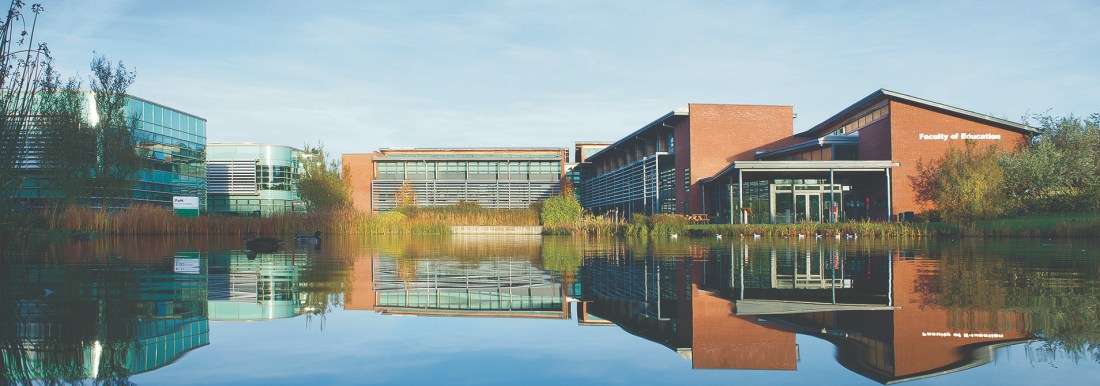
 

Putting it into to practice- the first week

The last few weeks in University had been building up to this; the first real taste of life as a  teacher. Professional Practice.

Having volunteered in one form entry schools, the first thing that struck me was the sheer size. I had walked past this school many times whilst I volunteered up the road but had never paid that much attention before.

Once over the initial shock, I sat there on my first day nervously outside the business managers office, trying to make some kind of awkward small talk with a seemingly much calmer first-year trainee. Despite being at the same university and on the same course, we had never met before much to the school’s disbelief,  (“No, seriously? You’re lying, really?”). This was the dream placement for her, her old primary school, a place where she had volunteered, she knew most of the staff, I was brand new.

After a whistle-stop tour with the business manager, whilst my brain tried to quickly retain all the information and memorize what seemed like a maze, I was sent to meet my class.

I was just sort of encouraged to drop in, it was in the middle of a maths lesson. I remember the children chanting in centimetres as they went from their tables to the carpet, but I’d be lying if I said that I remembered much else from that lesson, it was a bit of a blur.

After the lesson the teacher and three teaching assistants introduced themselves, thankfully they seemed really nice and somewhat relaxed, what a relief!

I was handed my first important document for the school’s maths scheme, this was where we were going to start, it would be (at this point) the ‘dreaded’ maths meeting. Though I had a chance to familiarize myself with the scheme for year 3, I didn’t teach anything for the first week. I spent that week mostly finding my way around the school, getting used to the structure of the day, adjusting my ears to the very bizarre sounding  bell that rang at the end of every allotted period and the sound of the classroom phone constantly ringing to everyone’s dismay; as well as observing the lessons, trying to work out the dynamics of my class, and most importantly navigating my way around the buildings, which I would spend many a day flitting between to the photocopier and back.

On Wednesday, I was introduced to my mentor alongside my fellow trainee in our first group weekly meeting alongside four PGCEs. I listened as the PGCEs discussed their busy schedules with our mentor until she stopped and turned to us, the perhaps naive first years. “So did your class teachers ask you to do anything for next week?” I replied, “Well he did mention something about possibly doing one or two maths meetings.” “Great! so let’s throw you both in the deep end then, you can do all the maths meetings for next week.” Oh dear.

As it turns out maths meetings aren’t as scary or alien as you’d think. A fifteen-minute whole class recap of the termly topics with usually a maths song thrown in and a bit of calendar maths for good measure. I might even miss them when I’m at another school!


And so it begins…

The very first week of university was partly a blur. It was hard not to feel like a little fish in a giant ocean, wandering somewhat aimlessly around the campus on my first day until I accidentally bumped into a very chatty third-year student in a purple hoodie who thankfully directed me to the lecture theatre. I managed to not get lost on my first day, though it would take me a good month before I  could  successfully (sort of) manage to navigate my way around the building (why do all the corridors look the same?) and I’m not sure I ever remember room numbers without checking blackboard 50 times.

It was a strange feeling sat in that very first introductory lecture suddenly I was forced to think of myself as not only a student but a trainee teacher.

It was hard to not feel a little overwhelmed, when I have been at the university all of three minutes, barely sat down in my seat, to then receive the ‘You are a professional lecture.’ Though this would become much less daunting  (and make  a lot of sense) as the week progressed.

The first seminar consisted of icebreaker activities and I usually hate icebreakers as it usually the awkward ‘sit in a circle and tell everyone one interesting fact about yourself’ however, building marshmallow towers was a nice way to be introduced to the group I would be spending most of the year with; it also allowed me to try to figure out the dynamics of the class. I was pleased to see that their was a variety of ages and commuter students as well as those living in halls.

We also spent the first week reflecting on our own motivations to be a teacher and a teacher that inspired us; this brought me back to my year 4 teacher and how he was always smiling and full of positive praise. I also remembered the time he brought his guitar to the lessons and the time he encouraged me to be in the school choir and allowing me to sing a little solo verse in ‘Away in a Manger’ at our Christmas service much to the delight of my seven-year-old self.

It was also interesting to hear from another member of the group who hadn’t enjoyed her own experience but was inspired by a teacher she saw when volunteering, who was so motivating and engaging that it inspired her to aim to become that person for a class of children.

It is fair to say that I felt a little isolated when I first started; the commuter students seemed to have already formed their own friendship groups (plus they all lived miles away from me anyway) and those living in halls had a place to return to (or sleep?) between sessions; I have never minded particularly being alone, but as I was new I had very little workload to keep me occupied and so I spent my time exploring the library and would spend many hours there in the months to come.

Of course, as the weeks progressed everything settled, the lectures and seminars became part of my routine, it was normal; I had somewhat found my place within the class, and my workload was always enough to keep me significantly busy.

Everything was still fairly relaxed until that very first English assignment and that’s where the real pressure begins…


Why should I become a teacher?

The question surrounding becoming a teacher is by no means a simple one and coming from a family full of primary school teachers who adore their job it is not hard for me to idealize teaching as profession.

The choice of Primary over Secondary is also something I am often asked; although this choice for me was simple; I enjoy working with children under twelve; I know how to deal with their various issues; I  find them enjoyable to work with;  I don’t have the capacity to work with teenagers. Being someone who never earned a detention in secondary school, I fail to fully understand or appreciate the need for teenage rebellion and I have little desire to spend my life telling year 9 girls to to wipe their make up off.

The only two secondary school teachers in my family also have come to hate the profession (though I know this can be the case with Primary aswell); they hate the long hours, the constant scrutiny and teaching pupils who don’t want to be there.

I also sit next to a primary teacher in my band who feels the need to consistently remind me what a ‘God awful’ profession it is and ‘It must be your calling because why else would you want to do it?’ I mostly ignore this,  I come to band to play the cornet not question my life choices. At times like this I like to remind myself that there are moaners in all professions, this not exclusive to teaching.

The primary school teachers in my family from NQTs right through to retired are full of wonderful anecdotes I am lucky to have such a great support network. When my auntie (a retired SEN teacher)  found out that I passed both my skills tests first time she bought me a gorgeous Michael Morpurgo book, “where my wellies take me” which has already sparked many ideas.

It was probably my uncle that inspired me the most to become a teacher; a retired headteacher of a small catholic school. I was privileged to attend his retirement mass a few years ago. The church was absolutely packed, I had never seen so many children in a church in my life. There were was lots of singing from the school choir, poetry and tears (and pictures of my uncle on zip wires from various PGLs). My Uncle always got ‘stuck in’ and loved nothing more than to take over the occasional  PE lesson. I remember a child asking him, ‘Mr Atherton, do you have to retire can’t you just work until you die?’

My uncle  was the first person put the idea into my head of becoming a primary school teacher. When I was younger up until the age of around thirteen I wanted to become an actress, i wasn’t particularly brilliant at acting but I  just enjoyed drama, it made me feel confident; I loved the feeling  that comes from weeks of rehearsals coming together to create a finished piece and the buzz of adrenaline just before going out on stage. I later enjoyed studying musical theatre at college and by participating in shows I made lasting memories.

I still love drama but I started to think of it more of a hobby than a potential career path; I was fifteen when my uncle suggested teaching, though I had pondered the idea briefly before. For some reason he thought I would make a good teacher. Since the age of 10 I had been helping out at my local Rainbow and Brownie groups and various ‘kids’ clubs at the community farm where my dad works; so I knew that I enjoyed working with children. I thought that I would take this idea forward and get some experience within schools.

Work experience at my primary school with year 2 and A year’s worth of volunteering in another local school with reception and year 1 and later year 5 was affirmation enough that this was the career for me.

And so here I am in my first year as a trainee teacher at Edge Hill! Hopefully exciting times are ahead.

st teresas amandareception bookgood bye miss athertonst thomas of wha